Wednesday, 17 August 2016

The day I flew to Namibia...

Admittedly old news now, but on Sunday 31st July I was sat in the London Guildhall celebrating my mate's wedding. Pretty safe season birding wise, although these days the big birds seem to drop whenever (usually when I have prior commitments!). Anyway, there was news of a Purple Swamphen at Minsmere RSPB - potentially a new British bird?

To be honest, I reckon a fair few people were stung recently with the acceptance of the Chinese Pond Heron. What this meant was a more 'glass half full approach' to this bird, with little skepticism about the bird's origins from the birding fraternity - with a recent scattering of birds in France, with one recently in the extreme northwest and nine extralimital records since April, there was also decent circumstantial evidence for wild origin. Added to this, the overall bluish toned plumage meant it was of the nominate Iberian/European race too; unlike the usual escaped poliocephalus 'Grey-headed' birds.

Despite flying to Namibia early evening, I decided to dawn raid Minsmere on 1st August and look what was plonking about in the early morning haze...
Purple Swamphen Minsmere RSPB, Suffolk 1st August 2016
Nice bird, great to be up and about at one of Britain's best wildlife reserves at the crack of dawn. I had actually seen a Purple Swamphen in Britain previously - in Cumbria in 1997; it cost me an Ivory Gull (which I still needed at the time) and I must admit that the origins (and race) of this bird were never properly determined. With the new breed of BOU decision making - a combination of pseudo-science and mere opinion - I doubt it'll be more than a couple of years before this Suffolk record gets the green light. Happy days!

Sunday, 7 August 2016

Namibia quick update

Just a quick update on the first week here in Namibia. We've been here since Tuesday, travelling south and west from Windhoek into the Namib Desert and then up onto the coast to the Walvis Bay/Swakopmund area - so far a night in Windhoek, a night in Bullsport then two nights at Kulala Desert Lodge and then here in Swakopmund. If you like aridity, deserts, wide landscapes and a distinct lack of people then this is a decent place to come. The South Atlantic midwinter rollers aren't too shoddy either. This isn't a hardcore birding trip, but I have managed to squeeze a bit in along with some mammal viewing: -
Dune Lark - Namibia's only truly endemic species
Ruppell's Korhaan
Ostrich
Pied Crow
Kalahari Scrub Robin
Hartmann's Mountain Zebra
Black-backed Jackal
African Wild Cat
Oryx
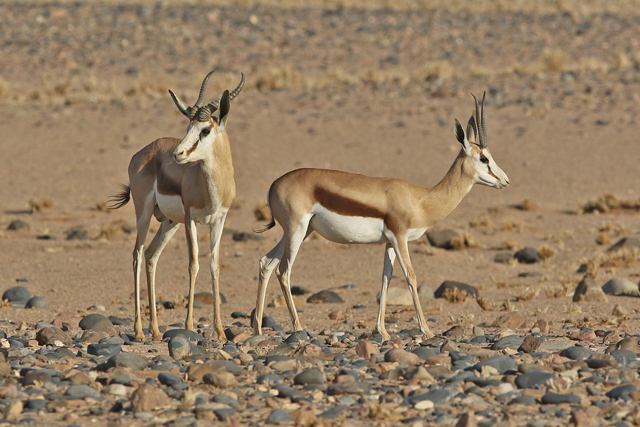
Springbok
And of course what trip of mine wouldn't be complete without some of these: -
adult Kelp Gull

Saturday, 30 July 2016

midsummer in London - Yellow-legged Gulls and more

juvenile Mediterranean Gull Greenwich, London 30th July 2016
 I got back from a few days in Romania late on Tuesday, and since then it has been a combination of work sandwiched around the tides for Central London gulling. This time of year is always decent, with juvenile Yellow-legged Gulls taking pride of place - they're always nice and crisp, and going to the right places you're able to get some really nice photos. Add to that a few rings (mainly local ones) and the first juvenile Mediterranean Gull today, and so London isn't necessarily the birding desert many of you think it is. There are two places that I tend to focus on locally...

Rotherhithe
Within 50 metres of my flat lies the River Thames. Lucky I know, but one of the main reasons for moving and staying here for so long. Anyway, there are three gull sites here - with all three blowing hot and cold. At the moment the best place is immediately east of Greenland Pier where just the other side of the lock gates, throwing a bit of bread out (at high and low tide) is likely to get the odd juvenile Yellow-legged Gull coming in. At low tide it's fine to get onto the foreshore so you can get eyeball views. Few other sites where views are consistently so good!
juvenile Yellow-legged Gull Rotherhithe, London 29th July 2016
juvenile Yellow-legged Gull Rotherhithe, London 30th July 2016
The two other places where I watch gulls in Rotherhithe are the jetties by the Surrey Docks Watersports Centre on Greenland Dock and then further west around the peninsular, at low tide, the beach adjacent to the Hilton Doubletree Hotel.

Greenwich by the O2
At this time of year, the whole place is full of tourists but as soon as you head along the Thames adjacent to the O2, the crowds thin out and the gulls begin. Vital to be here a couple of hours either side of low tide, otherwise you'll be wasting your time. But it's always got a decent gathering (low 100s) of gulls and I've been regularly getting a handful of Yellow-legged Gulls here since early July. The place to watch is along the Thames Path, at the head of the peninsular where there are some obvious trees with the beach below it. Better numbers here than Rotherhithe but the views aren't always as good.
juvenile Yellow-legged Gull Greenwich, London 30th July 2016
juvenile Yellow-legged Gull Greenwich, London 27th July 2016
There is also a bit more variety here too, and in spring I found a juvenile Iceland Gull here. Though today I had to make do with this white-winged gull: -
leucistic adult Herring Gull Greenwich, London 30th July 2016

Canada - Algonquin 31st May & 1st June

I meant to do this post a lot sooner after I got back but busy life takes its toll on blogging. Anyway, Mark L and I spent our final couple of days of our holiday in Algonquin National Park; a relative wilderness area three hours north of Toronto. It's a really special area with lovely boreal scenery and just a couple of roads traversing an otherwise vast area of forest and spruce bog. Also, importantly, it holds a lot of breeding species with some tricky to find elsewhere - main targets here are usually Black-backed Woodpecker, Spruce Grouse, Boreal Chickadee and Grey (Gray?) Jay. Click here for a decent birding map that we used for our visit.

The Mizzy Lake Trail was where we focused our efforts; firstly driving along the Arowhon Road where we quickly saw our first target - Boreal Chickadee - while singing Ovenbirds, Yellow-rumped Warblers and Red-breasted Nuthatches were to become familiar sights and sounds.
Red-breasted Nuthatch Algonquin, Ontario 31st May 2016
The plan for our first day was to just walk, walk and walk until we felt we'd had enough and/or the birding activity died down. Thankfully it didn't get amazingly warm as we walked along the trail to Wolf Howl Pond, West Rose Lake and 'Flycatcher Bog' for several km. The mosquitoes were present here, though never a real annoyance. The birds started flowing within just a couple of hundred metres of leaving the car, with this female Spruce Grouse staying pretty chilled by the path as we admired her: -
female Spruce Grouse Algonquin, Ontario 31st May 2016
Swainson's Thrushes, White-throated Sparrows and Ovenbirds continued to sing/skulk from the undergrowth while Golden-crowned and Ruby-crowned Kinglets were seen with some regularity.
Ovenbird Algonquin, Ontario 31st May 2016
One of the things that was most frustrating were the singing Nearctic wood-warblers - for colourful birds when singing they remained pretty static so they were pretty tricky to locate as they had a tendency to throw their tunes a bit. Blackburnian and Yellow-rumped were the most numerous, while Canada, Magnolia, Black-throated Green, Black-throated Blue and Black-and-white Warblers were also seen (and heard) along the walk.
Myrtle Warbler Algonquin, Ontario 31st May 2016
On the open water, a handful of Hooded Mergansers were noted along with a couple of Great Blue Herons. Another couple of Boreal Chickadees were located too, in small flocks with their commoner Black-capped cousin: -
Boreal Chickadee Algonquin, Ontario 31st May 2016
Up until this trip, for one reason or another, Grey Jay was a species I'd missed out on - always visiting periperal sites and/or at the wrong time of the year. So when a fluttery group of birds came to investigate us along a remote path, I was all for giving them a bit of attention. What is it though with yanks, jays and rings - these guys were 'banded' as were the Florida Scrub Jays (understandably) and the Mexican Jays I saw in Texas.

Grey Jays Algonquin, Ontario 31st May 2016
A load of Cedar Waxwings buzzed about in the trees and Red-eyed Vireos were common, and I found a cracking male Spruce Grouse munching away in a trackside spruce; Alder Flycatchers were present in a couple of the boggy areas and a single Least Flycatcher was located too. In these swampy areas, Swamp and Lincoln's Sparrows were seen along with a fair few Common Yellowthroats - all good stuff! However, by mid afternoon (having been out since dawn) we felt as though we'd exhausted the place despite having failed to locate Black-backed Woodpecker. And so we headed east within the National Park boundary to the Lake of Two Rivers area and the adjacent abandoned airstrip; the gen promised so much (including Black-backed Woodpecker) but delivered so little - a nice Pileated Woodpecker, a few Chipping Sparrows and Yellow and Chestnut-sided Warblers being the highlights.

As it got towards dusk, we had another failed Eastern Whip-poor-will and American Woodcock attempt. For some reason too, I declined rapidly and spent the rest of the night either sleeping or feeling distinctly ill. And as the next day dawned, I was slow to rise still feeling grim - though Mark L was great by getting me going but realising he was going to have to do everything! Though I started off by finding this big boy on the Mizzy Lake trail - a nice Moose (the first of three): -
Moose Algonquin, Ontario 1st June 2016
Having retraced our steps along the Mizzy Lake trail, we got to West Rose Lake and in the bare trees by the lakeside there was our final Algonquin target - a nice female Black-backed Woodpecker! It showed well for half an hour or so before becoming more distant, and was thankfully nice and easy given how grim I was feeling.
Black-backed Woodpecker Algonquin, Ontario 1st June 2016
With time ticking on before the need to go back to Toronto for our flight home, we had a quick walk around the Spruce Bog trail (at the east end of the park) where things were quiet, except for a Moose and this cracking male Chestnut-sided Warbler: -
Chestnut-sided Warbler Algonquin, Ontario 1st June 2016
And so that was that, another successful US trip with decent company and plenty of birds. Highlights for me being displaying Upland Sandpipers, singing Kirtland's Warblers and Bobolinks galore, Henslow's and Le Conte's Sparrows, lekking Sharp-tailed Grouse plus obliging Spruce Grouse and Grey Jays in Algonquin. Not bad for 5 days of birding!

Sunday, 3 July 2016

French weekender

Karen and I had a quick break the weekend just gone on the other side of the Channel. Really pleasant time and so easy from southeast London (and cheap - think our wine savings paid for our Eurotunnel trip!). We stuck to the area within an hour or so west/southwest of Calais and were very nicely surprised about the small towns and decent countryside we encountered. Add to that some brilliant seafood (rarely post food recommendations on here but the Fruits de mer at La Marie Galante in Audresselles were very memorable) and a load of gulls, and I'll be back for some second helpings!

Though we stayed in Le Touquet, which is a decent resort town, the gulling is centred on Boulogne-sur-mer and the suburb immediately south called Le Portel. As this is France's largest port, I can well imagine the copious amounts of gulls present in autumn and winter but even in early July the nesting activity was massive - loads of local Herring Gulls plus it was good to see urban nesting Kittiwakes and their young.
Kittiwakes Boulogne-sur-mer, Pas-de-Calais 3rd July 2016
Of everything else, there were a dozen or so Mediterranean Gulls cruising around - the odd one or two settling down.
Mediterranean Gulls Le Portel, Pas-de-Calais 3rd July 2016
Gull rings included three Great Black-backed Gulls from Norway, a Dutch ringed Herring Gull and three Belgian birds (two Herring Gulls and a Lesser Black-backed Gull).
Great Black-backed Gull (JC055) Boulogne-sur-mer, Pas-de-Calais 3rd July 2016 - ringed as a chick at Lille Vigeskjær, Lindesnes, Vest-Agder, Norway on 5th July 2015,  then seen at Ameland, The Netherlands on 1st November 2015 before turning up at Boulogne-sur-Mer, Pas-de-Calais, France from 27th November 2015
Lesser Black-backed Gull (UK:AB) Boulogne-sur-mer, Pas-de-Calais 3rd July 2016 - ringed as a chick at Zeebrugge, Belgium on 20th July 2012 and seen to winter in Huelva, Spain (October 2013, February 2014 and 2015); also regularly seen in the Boulogne area as well as back in Zeebrugge, Belgium on 16th June 2016
Anyway, the trip was a good excuse to get out of London after a few hectic weeks and it has certainly given me some food for thought for quick winter gull ring reading trips!  

Monday, 20 June 2016

Michigan day three

There'd been a fair bit of rain overnight, but the dawn skyline at Sault Sainte Marie showed signs of promise as we headed to Munuscong Potholes (about half an hour back south). This was an area that Mark and I decided to do within the last week of the planning phase of the trip, specifically targeting two species - Sharp-tailed Grouse and Le Conte's Sparrow. We considered it was the effort as you'll see.

On arrival at Munuscong, first bird of the day was a low flying American Bittern - superb! This was then closely followed by some blurry shapes in an adjacent field, that as the light got better turned into ten Sharp-tailed Grouse at their lek site. Great to see the violet display patch revealed on their necks, as well as them strutting about revealing their sharp tails!

Sharp-tailed Grouse lek at Munuscong, Michigan 30th May 2016
Whack onto that a couple of flyover Sandhill Cranes and a healthy population of Bobolinks - really nice pleasant open landscape US birding. And very few other people about too. A pretty isolated, remote location benefiting from the US's relatively extensive agriculture.

Bobolink Munuscong, Michigan 30th May 2016
Munuscong is, however, home to a bit of a prize species. American sparrows are pretty fascinating and with Henslow's Sparrow recorded on day one, it was the buffy toned, diminutive Le Conte's we were after here. Typically these scarcer sparrows are always early morning birds and this species was no exception - they seemed to like the wet grassland and although there were probably half a dozen singing males, we only managed to track down this one. Try and spot the bird - it was actually singing from this same spot for a good ten minutes!
Spot the Le Conte's Sparrow...
Munuscong also had some (in my opinion) beautifully plumaged, pristine Ring-billed Gulls, lots of Yellow Warblers, Savannah Sparrows and a couple of Alder Flycatchers. Three species of 'common' sparrow too with Savannah, Song and White-throated. The undoubted pride of place went to this Upland Sandpiper though, that decided to do a display flight and then land on a post right next to the road - exactly what dreams are made of. Or at least that's what I'd really wanted...
Upland Sandpiper Munscong, Michigan 30th May 2016
We had a quick look round the campsite area where a Blackburnian Warbler and Northern Parula were the highlights; Ovenbirds sang pretty frequently but remained fairly elusive, though a Hairy Woodpecker was a decent addition to the trip list.

We drew ourselves away from Munuscong mid morning, knowing that there was a six or seven hour drive ahead. All went pretty smoothly to be honest - the Canadian border lacked the supercilious attitude on the yank side and to top it off, I got caught for speeding (55mph on straight roads with traffic is no use really) and got let off by a lovely Canadian policeman who wished us on our way with 'you'll be blown over by Algonquin'! Let's hope so...

An evening trip out from our base in Huntsville, Ontario produced at least one Eastern Whip-poor-will calling away. Try as we might, among the vast number of midges, we couldn't see the species once again. Can't win them all I suppose.

Wednesday, 8 June 2016

Michigan day two

I didn't even remember going to sleep the previous evening. After some pretty heavy overnight rain, Sunday 29th May dawned warm and a bit overcast in Tawas. We headed off to Tuttle Marsh first thing where a quick visit revealed a single Trumpeter Swan, the target species, along with a couple of Hooded Mergansers sitting pretty in the early morning light.
Trumpeter Swan Tuttle Marsh, Michigan 28th May 2016
Hooded Mergansers Tuttle Marsh, Michigan 28th May 2016
The main event of any trip to Michigan was up next. Kirtland's Warbler - one of the rare success stories, with conservation and habitat creation boosting the population to c.3,500 birds (up from  a global population of just 167 singing males in 1974!). The species nests in jack pines that are rarely over a couple of dozen feet, and their song rings out from the Huron Forest pretty much wherever this habitat can be found these days. Tours to see this species still happen pretty regularly (see here) although a quick search of Ebird gives you some up-to-date gen on where to find the species too. We did the latter, and though tricky to pin down and get good views, a quality male Kirtland's Warbler performed admirably. Pretty large warblers, at least more so than I'd expected with a nice slate back, rich yellow underparts and nice white eye crescents: -
male Kirtland's Warbler Kobs Road, Michigan 28th May 2016
Black-capped Chickadees, Nashville Warblers and the odd Blue Jay were the only other birds seen. However, it was at the Kirtland's Warbler site we met John Lowry - a well connected Michigan birder - who provided us with some really useful gen for later in the day. But before we left the Tawas area, it was time for a walkabout Tawas State Park again. Numbers were down overall compared to yesterday, but there was a real push of Blue Jays (dozens) as well as about 20 Orchard Orioles. Warblers were on the quiet side with a single Wilson's the highlight along with a couple of American Redstarts while a vocal Willow Flycatcher was good to nail to species.
Willow Flycatcher Tawas State Park, Michigan 28th May 2016
We headed southwest from Tawas, on the basis of some Mourning Warbler info from John Lowry, to Big Creek Road (location here). Here this elusive target was located with relative ease, at least vocally. Given the propensity of the species to frequent and sing from low perches, views were not easy compared to the other warblers we'd been watching but some semi-decent views were had in the end. Eastern Wood-Pewee, Yellow Warbler, American Redstart, Indigo Bunting and Belted Kingfisher were also seen here.
Blue Jay Tawas State Park, Michigan 28th May 2016
And then it was up north a couple of hours to the Amish land immediately to the north of Mio. The real highlight here was an Upland Sandpiper feeding in the fresh pastures, while our first displaying Bobolinks were quality too despite the distance...
Upland Sandpiper near Mio, Michigan 28th May 2016
With an early start required the next day, it was mid evening by the time we reached Michigan's Upper Peninsula and the Canadian border at Sault Sainte Marie. A fair bit of driving done, but with all targets seen, not a bad day's birding.